Crawl Space Water Extraction in Woodstock, GA
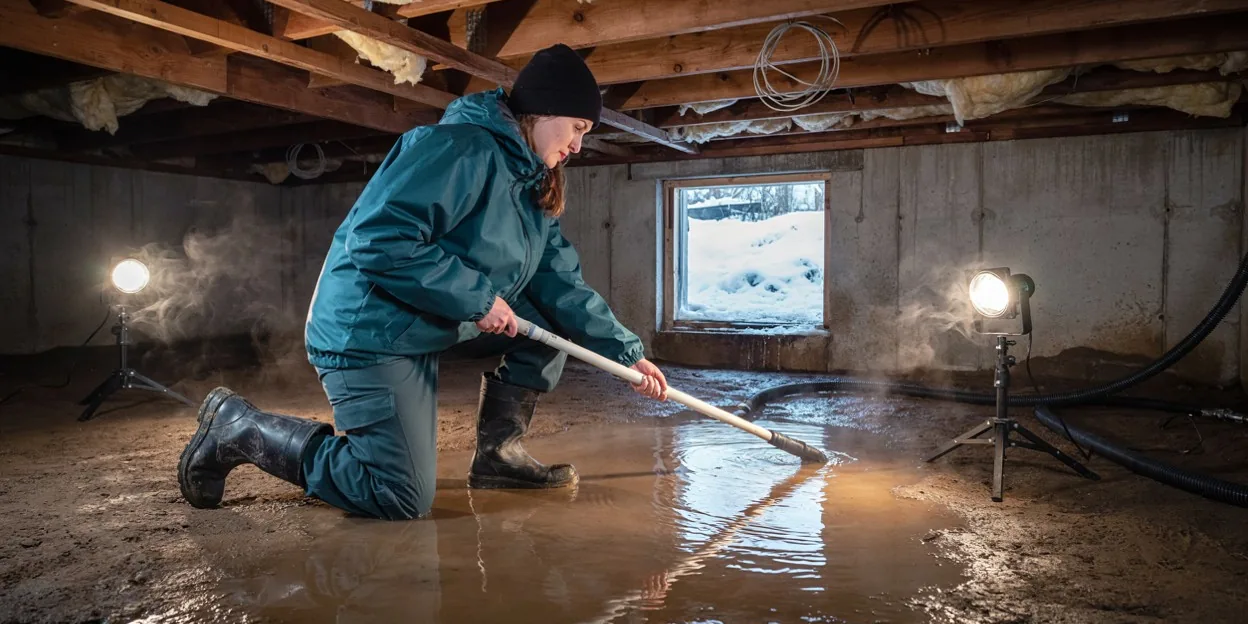
The hallway floor has felt spongy for a week, and when you finally opened the crawl space door and pointed a flashlight in, the beam bounced off water and hanging insulation. This site connects you by phone with an independent local provider who does crawl space water extraction in Woodstock and across Cherokee County.
Under the floor with a pump and a meter
The crew goes in through the access door with a light, a pump, and a meter, and the first question is where the water came from. Runoff through a vent or under the sill after rain is one answer. A supply line or a drain running under the floor is another and needs a plumber first. A water heater or a washer upstairs that drained through the subfloor is a third.
Then they pump out the standing water and meter the joists, the girders, the underside of the subfloor, and the sill plate. Fiberglass insulation that got wet comes down. A dehumidifier and air movers go under the house, and the crew comes back to take readings until the wood is back to its dry number.
Open the door, take a photo, and stay out if the joists sag
If the water is from a pipe, close the main. If the water is near the furnace, the air handler, or any wiring under the house, do not go in. Prop the access door open so air moves. Take a photo from the door with a flashlight and note where the water looks deepest.
If it rained recently, walk the outside of the house and look for a downspout that dumps beside the foundation, a low spot against the wall, or a vent below grade. Then call and describe what you saw.
Insulation comes down; joists and subfloor dry in place
Joists, girders, and plywood subfloor usually dry in place if the crew gets to them before the wood softens. Wet fiberglass between the joists comes out every time, because it holds water against the subfloor and grows a smell. A plastic vapor barrier on the dirt is replaced once the ground has dried. Wood that sat in water for weeks gets checked for softness at the sill.
The floor above is the second question. If the water came down through it, the room upstairs needs its own water extraction. If the crawl space stayed damp long enough to wick up into the subfloor, hardwood on the main floor can cup from below while the top looks fine, which is where hardwood floor drying starts.
Vented crawl spaces on red clay from Hickory Flat to Sixes
A large share of the houses built in Cherokee County from the 1990s through the 2010s, especially the streets around Hickory Flat, Sixes, Lebanon, and the older side of Towne Lake, sit on a vented block crawl space rather than a basement. The lots slope, the soil is red clay, and a crawl space that is two feet deep at the uphill wall can be five feet at the downhill wall. Runoff follows the slope in through the vents and pools at the low end, where it can sit unnoticed until the floor above goes soft.
Humidity makes it worse. The vents that were meant to air the space out let in summer air that is already wet, and a crawl space under a Woodstock house can hold 70 percent humidity from May to September without a drop of standing water. After the September 2009 storms closed roads along Noonday Creek and Little River, crawl spaces across the county stayed wet for weeks after the yards had drained. The older houses along Main Street in downtown Woodstock sit on brick piers over shallow crawl spaces and take water the same way, just with less room to work. Ask the crew to photograph the space before pumping and log the joist readings, since a crawl space is the part of the house no adjuster will crawl into.
When you call about water under the house
Say how deep the water looks, whether it came from a pipe or from outside, whether the floor above feels soft, and whether the furnace or ductwork is down there. Have the neighborhood name and a callback number ready. Call (770) 697-0510.