Structural Drying in Woodstock, GA
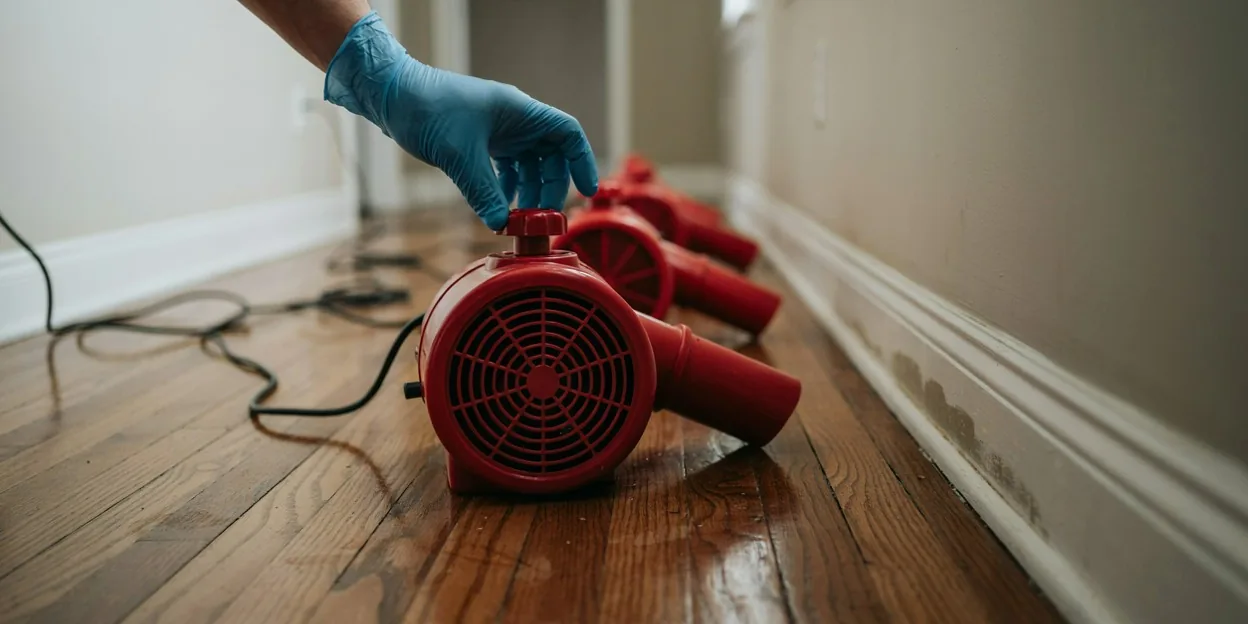
The plumber fixed the line on Tuesday, you ran two box fans through the weekend, and on Monday the baseboard is still swollen and the room still smells like a damp basement. This site connects you by phone with an independent local provider who does structural drying in Woodstock and across Cherokee County.
Drying by the meter instead of by the calendar
The crew starts with a full set of readings: subfloor, the bottom of each wall, the studs behind any drywall that was opened, and the ceiling or crawl space below. Each reading is compared with a dry spot in the same material so the target is the house's own dry number, not a guess.
Then the equipment goes in. Air movers push air across the wet surfaces so moisture leaves the material. Dehumidifiers pull that moisture out of the room air so it does not settle back into the drywall across the hall. In a closed wall cavity the crew may run air through small holes behind the baseboard instead of opening the whole wall. Readings get taken every day, and the equipment moves or comes out when the numbers say so.
Keep the doors shut and the fans running
Leave the equipment on. It is loud and it warms the room, but every hour it runs is an hour of drying, and turning it off overnight can add a day to the job. Keep exterior doors and windows closed; summer air in Woodstock carries more water than the room does. Keep children and pets clear of the cords and the air movers.
Photograph the wet areas before the equipment goes in if you have not already. Write down when the leak started and when it stopped, since the crew's drying estimate and the adjuster's file both depend on that.
Materials that dry in place and materials that do not
Framing, plywood subfloor, and most solid wood dry in place if drying starts before the wood softens. Drywall that wicked a few inches usually dries once the baseboard comes off and air reaches the cavity; drywall that sat in water for days or took contaminated water comes out. Fiberglass insulation in a wet wall almost always comes out, because it holds water against the studs and never dries evenly. Carpet pad goes; carpet often stays if the water was clean.
Drying follows water extraction, and it is a separate step from the rebuild. When the readings hit target, the crew pulls the equipment and the drywall, trim, and paint work begins. If the wet room sits over a vented crawl space, the crew meters the subfloor from below as well, which is the same check described under crawl space water extraction.
Why a wet room in Woodstock does not dry itself
The trouble with drying a house here is the air outside. Cherokee County summers run humid from May into September, and an open basement door on an August afternoon lets in air that is already carrying most of the water it can hold. That is why the dehumidifier is not optional in this climate the way it can be in Colorado or Utah. A basement or crawl space at 70 percent relative humidity stays wet for weeks with fans alone.
The houses add to it. Most of Woodstock's subdivisions from the late 1980s onward, from Towne Lake to the streets around Hickory Flat, are two-story frame houses with a daylight basement or a vented crawl space, and both hold humid air under the living space year-round. After the September 2009 floods, when Noonday Creek and Little River closed roads on both sides of Interstate 575, basements across the county stayed damp long after the water was pumped out because nothing was moving the air. A drying plan that logs readings daily is the difference between a basement that is done in a week and one that grows a musty smell by October.
When you call about a room that will not dry
Say when the water stopped, which rooms and which level got wet, what has already been pulled out, and whether fans have been running. Mention a finished basement or a crawl space under the wet room. Have the neighborhood name and a callback number ready. Call (770) 697-0510.