Washing Machine Overflow Cleanup in Woodstock, GA
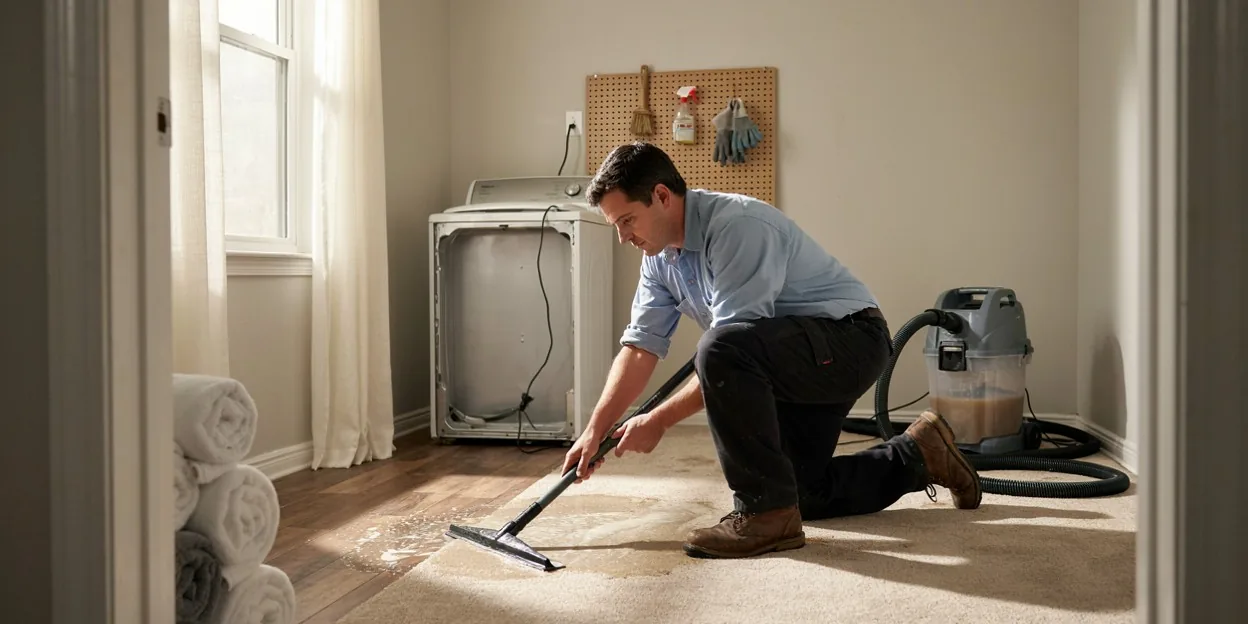
The washer was on its second load when the hot hose let go, and by the time anyone noticed, the upstairs hall carpet was soaked and water was running down the inside of the kitchen light. This site connects you by phone with an independent local provider who does washing machine overflow cleanup in Woodstock and across Cherokee County.
Tracing the water from the laundry room to the room below
The crew starts in the laundry room and follows the water. A burst supply hose can put out several gallons a minute, and on a second floor almost all of it goes down through the subfloor, into the joist bay, and out through the ceiling below. They meter the laundry floor, the hall, the walls the water touched, and then the ceiling and walls of the room underneath.
Then both levels get worked at once. Standing water comes off the laundry floor, the wet carpet and pad in the hall come up, and the ceiling below is opened at the low point where the readings peak. Air movers and a dehumidifier run in the joist bay from above and below until the framing dries.
Close both valves, then drain the ceiling before it drains itself
Turn the two valves behind the washer clockwise until they stop, or close the main if the valves are stuck. Unplug the washer and dryer if the outlet is dry; if it is wet, flip the laundry circuit at the panel. Downstairs, put a bucket under any drip and move furniture and electronics out from under the wet ceiling. Turn off the circuit for any light fixture that is dripping.
Photograph the laundry floor, the hall, and the ceiling below from the doorway. Do not poke the ceiling. Then call and say the water came from the washer, because that tells the crew to bring equipment for two floors.
Carpet pad and wet insulation go; subfloor and joists dry
The carpet in the upstairs hall can often be dried and relaid if the water was clean supply water; the pad under it comes out. Laminate or engineered flooring in the laundry room that swelled at the seams usually does not recover. The plywood subfloor and the joists dry in place. Ceiling drywall below that bulged or held water is cut out in the wet zone, and any insulation in the bay comes out.
The ceiling side of the loss is described in more detail under ceiling water damage. If the overflow was gray water from a drain backup rather than a hose, tell the crew, because contaminated water changes what stays. Once the water is out, structural drying runs until the joist bay reads dry.
Second-floor laundries in the subdivisions off Highway 92 and Towne Lake Parkway
Almost every two-story house built in Woodstock since the mid-1990s puts the laundry upstairs next to the bedrooms, over the kitchen, the family room, or the garage. It saves carrying baskets, and it means every hose failure is a two-floor loss. Rubber supply hoses on a washer installed in 2005 are well past the age when they let go, and a hose that fails while the family is at work runs for hours.
The houses in Bradshaw Farm, Wyngate, Brookshire, and the newer streets off Hickory Flat Highway share that layout, and the ceiling below the laundry is usually the kitchen, where the loss runs into cabinets and a hardwood floor as well. If hardwood downstairs got wet from above, the hardwood floor drying page covers what can be saved. Humid summer air keeps the joist bay from drying on its own, which is why the crew opens the ceiling instead of waiting.
When you call about a washer that flooded two floors
Say whether the water is still running, which floor the laundry is on, what room is below it, and whether the ceiling is dripping or bulging. Mention hardwood or cabinets downstairs. Have the neighborhood name and a callback number ready. Call (770) 697-0510.